


Glittering Stones >> Articles
The Heart of the Matter - Gemstone Jewelry
If you're planning a gift of gold or gemstone jewelry for your sweetheart, take some time to learn the terms used in the industry. Start with the basics. Carats and karats. What's the difference? Simply put, a carat is a unit of weight for gemstones, including diamonds; a karat is a unit for measuring the purity of gold.
Gold
The higher the karat rating, the higher the proportion of gold in the piece of jewelry. For example, 24 karat (24K) gold has more gold content than 14K gold. But because 24K gold is soft, it's usually mixed with other metals to increase its hardness and durability; 14K jewelry contains 14 parts of gold, mixed in throughout with 10 parts of base metal.
There's a big difference between karat-gold and gold-plated jewelry. Gold-plated describes jewelry with a layer of at least 10K gold bonded to a base metal. Gold plating eventually wears away, depending on how often the item is worn and how thick the plating is.
Gemstones
Gemstones can be naturally mined, laboratory-created or imitation. Stones created in a lab look identical to stones mined from the earth. The big difference is in the cost - laboratory-created stones are less expensive than naturally mined stones. But because they look just like stones mined from the earth, they must be identified as lab-created. Imitation stones resemble naturally mined stones but are not identical and are usually made of glass or plastic. Imitation stones must be identified as imitation. If you are purchasing a naturally mined stone, ask if it has been treated. Gemstone treatments - such as heating, dyeing or bleaching - can improve a stone's appearance or durability. Some treatments are permanent; some may create special care requirements. Treatments also may affect the stone's value.
Diamonds
When you're buying a diamond, consider four criteria, often referred to as "the 4C's" - cut, color, clarity and carat weight. Each factor affects the price.
Cut not only refers to the shape of the diamond, but also to the size, angle, uniformity and polish of the facets.
Color is sometimes "graded" on a scale. However, scales are not uniform: a "D" may be the best color for one scale, but not for another. Make sure you know how a particular scale and grade represents the color of the diamond you're considering.
Clarity refers to the presence or absence of internal flaws, called inclusions, that occur naturally within the stone, or to external blemishes, such as scratches or chips. A diamond can be described as "flawless" only if it has no visible surface cracks or other imperfections when viewed under 10-power magnification by a skilled diamond grader.
Carat weight may be described in decimal or fractional parts of a carat. If the weight is given in decimal parts of a carat, the figure should be accurate to the last decimal place. For example, ".30 carat" could represent a diamond that weighs between .295 - .304 carat. Some retailers describe diamond weight in fractions and use the fraction to represent a range of weights. For example, a diamond described as ½ carat could weigh between .47 - .54 carat. If diamond weight is stated as fractional parts of a carat, the retailer should disclose two things: that the weight is not exact, and the reasonable range of weight for each fraction or the weight tolerance being used.
Jewelry Shopper's Checklist
Once you're ready to buy jewelry, shop around. Compare quality, price and service. If you're not familiar with jewelers in your area, ask family members, friends and co-workers for recommendations. Also, when ordering online and you've never heard of the seller, check on its reputation with the Better Business Bureau or the state attorney general's office. You also should:
Ask for the store's refund and return policy before you buy. When ordering online, keep printouts of the web pages with details about the transaction, including refund and return policies in case you're not satisfied.
Check for the appropriate markings on gold jewelry.
Ask whether a gemstone is natural, laboratory-created, or imitation.
Ask if the gemstone has been treated. Is the change permanent? Is special care required?
Make sure the jeweler writes on the sales receipt any information you rely on when you make your purchase, such as the gemstone's weight or size. Some jewelers also may supply a grading report from a gemological laboratory.
NOVEMBER BIRTHSTONE - CITRINE
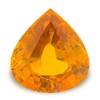
COMMEMORATIVE EVENT - 13th Anniversary
KEYWORDS - Success, Abundance, Personal Power
ALSO KNOWN AS - Merchant's stone, Success stone
COLORS - Pale yellow to brown
OCCURRENCE - Brazil
COLOR ZONING - Tiger stripes or Zebra stripes
 |
|