


Glittering Stones >> Semi Precious Stones >> Obsidian
Semi Precious Stone Obsidian
Top stone is obsidian, below that it is pumice and in lower right hand is rhyolite (light color)Obsidian is one type of naturally occurring glass, which produced from volcanoes (igneous rock) when a fluid felsic lava cools rapidly and then freezes without sufficient time for crystal growth, for example by flowing into a body of the water. It consists mainly of SiO2 (silicon dioxide), 80% or more. Obsidian is a mineral-like, but not a true mineral because it is not a crystalline. Its composition is very similar to that of granite and also rhyolite. It is sometimes also classified as a mineral aid.
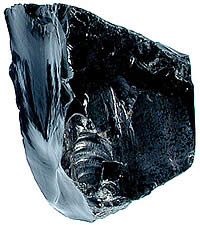
Historical Facts of Obsidian
Hardness: 5 - 6
Chemical Composition: 70–75% SiO2, plus MgO, Fe3O4
Density: 2.6
Luster: Vitreous
Color: Black, Gray, Dark green, Red, Yellow, Pink
Occurrence: Newberry Volcano, Medicine Lake Volcano of western North America, Sierra Nevada of California, Yellowstone National Park and other western US states
Gem Jewelry Obsidian
Bracelet |
 |
Earring |
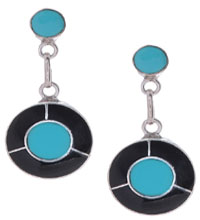 |
Necklace |
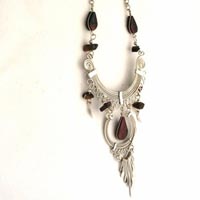 |
Ring |
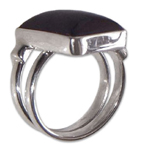 |
NOVEMBER BIRTHSTONE - CITRINE
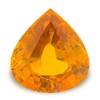
COMMEMORATIVE EVENT - 13th Anniversary
KEYWORDS - Success, Abundance, Personal Power
ALSO KNOWN AS - Merchant's stone, Success stone
COLORS - Pale yellow to brown
OCCURRENCE - Brazil
COLOR ZONING - Tiger stripes or Zebra stripes
 |
|