Glittering Stones >>Semi
precious stones » Quartz
Semi Precious Stone Quartz
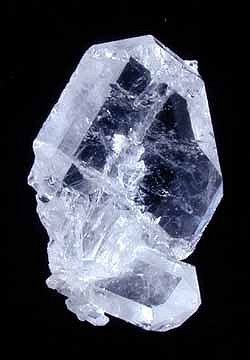
Quartz is amongst one of the most common and
precious minerals in the Earth's continental crust. It has a hexagonal
crystal structure made of the trigonal crystallized
silica (silicon dioxide, SiO2), with a hardness of 8 on the Mohs
scale. Density is 2.66. The typical shape is a six-sided prism,
which ends in six-sided pyramids, although these are often twinned,
distorted, and so massive that only part of the shape is apparent
from a mined specimen. Additionally it has bed is a common form,
particularly for gems
varieties such as amethyst, where
the crystals actually grow up from a matrix and
thus only one termination pyramid is present. A quartz
geode consists of a hollow rock (usually with an approximately
spherical shape) with a core lined with a bed of the crystals.
 |
Historical Facts of Quartz
Refractive Index |
1.544 - 1.553 |
Chemical Composition |
SiO2 |
Hardness |
7 |
Density |
2.65 |
Crystal Group |
Trigonal |
Ocurrence |
Every continent |
|
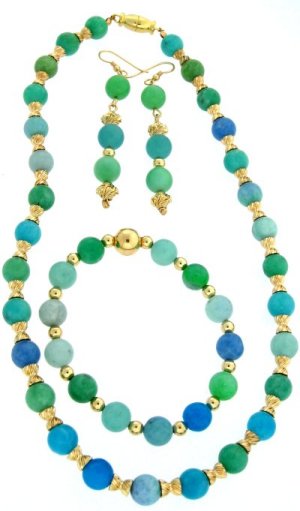
Gemstone Quartz Jewlery
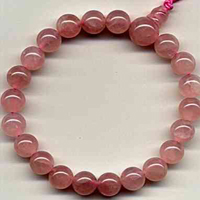
Quartz Bracelet |
 |
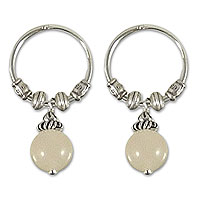
Quartz Earrings |
 |
Quartz Necklace |
 |
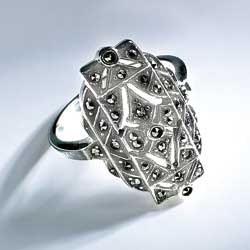
Quartz Rings |
 |
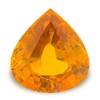
NOVEMBER BIRTHSTONE - CITRINE
COMMEMORATIVE EVENT - 13th Anniversary
KEYWORDS - Success, Abundance, Personal Power
ALSO KNOWN AS - Merchant's stone, Success stone
COLORS - Pale yellow to brown
OCCURRENCE - Brazil
COLOR ZONING - Tiger stripes or Zebra stripes