Gems Library
Precious stones
Semi Precious Stones
Gems Jewellery
Gems and Uses
gems gallery
Crystal
Choose Gems For U


    Home   History   gem type   Gem uses   About Us   Contact us


Olivine

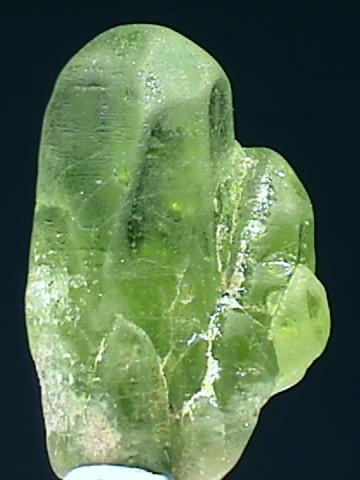
The mineral olivine is an orthosilicate of magnesium with the formula (Mg,Fe)2SiO4, in Olivinewhich the ratio of magnesium and iron is found to vary between the 2 end members of forsterite[?] (Mg-rich) and Fayalite [?] (Fe-rich). Olivine crystallizes in the orthorhombic system in somewhat flattened forms but may occur massive or granular. It has a concordat fracture and is rather brittle. The hardness of olivine is 6.5-7, its specific gravity is 3.27-3.37 and it has a vitreous luster. It is usually colored olive-green (hence the name), though it may be reddish from the oxidation of iron. It is transparent to translucent. Olivine occurs in both igneous rocks as a primary mineral and in certain metamorphic rocks, and has also been discovered in meteorites.
Olivine forms from magma that is rich in magnesia [?] and low in silica, forming such rocks as gabbros, no rite[?], predictive[?] and basalt. The metamorphosis of impure dolomite or other sedimentary rock with high magnesia and low silica content also seems to produce olivine.
Transparent olivine is sometimes used as a gemstone, often called peridot, the French word for olivine. It is also called chrysalides from the Greek words for gold and stone.

Olivine is actually a name for a series between two end members, Fayalite and forsterite. Fayalite is the iron rich member with a pure formula of Fe2SiO4. Forsterite is the magnesium rich member with a pure formula of Mg2SiO4. The two minerals form a series where the iron and magnesium are substituted for each other without much effect on the crystal structure. Fayalite due to its iron content has a higher index of refraction, is heavier and has a darker color than forsterite. Otherwise they are difficult to distinguish and virtually all specimens of the two minerals contain both iron and magnesium. For simplicity sake and general public recognition, they are often treated as one mineral, olivine. Olivine however is not officially recognized as a mineral (see other non-minerals such as apophyllite, tourmaline, mica, serpentine, chlorite and apatite).
Olivine is known by many names. Besides its actual mineral names, forsterite and Fayalite, it is known as "chrysalis", "evening emerald" and peridot. The term chrysalis is an old German name that was applied to gemmy olivine, but now is only sometimes used to refer to light yellowish green olivine. Evening emerald is a name given to olivine's gemstone variety, peridot, by some jewelers in some attempt to increase the apparent value of the stones.

Olivine's gemstone variety, known as peridot, is one of the most mispronounced of gemstone names. The correct pronunciation has peridot rhyming with doe or depot. But peridot is often pronounced incorrectly so that it rhymes with dot. Peridot is the birthstone of August and is usually a very affordable colored gemstone. Unfortunately it is often compared to the rich dark green of emerald and in this comparison it is often found lacking. But peridot has its own unique green-yellow color that is different from emerald and this comparison is rather unfair. Most peridot is actually the magnesium rich forsterite and its color is caused by the presence of iron ions. Fatality’s higher iron content make for darker, less attractive specimens that are not generally used as gemstones. The best colored peridot has an iron percentage less than 15% and includes nickel and chromium as trace elements that may also contribute to the best peridot color. Peridot is a colorful, affordable and attractive gemstone.

Olivine is found in ultramafic igneous rocks and marbles that formed from metamorphosed impure limestones. Mafic is a word that is used to define igneous rocks with a high iron and magnesium content. The "MA" is for magnesium while the "F" is for ferrum, the latin word for iron. The olivine minerals have a high melting point and are the first minerals to crystallize from a mafic magma. Forsterite crystallizes first with fayalite crystallizing last when other minerals such as the pyroxenes are just beginning to form. The early crystallization of olivine is the reason that molten lavas can contain already crystallized grains of olivine. Some ultramafic rocks can be composed of almost all olivine and these are called dunites or peridotites. Peridotites contain the same chemical makeup as the molten magma in the Earth's mantle. Thus peridotite could be called the most common rock by volume in the Earth, although on the Earth's surface and in the crust it is not nearly as well represented.

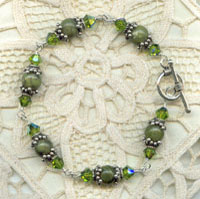
Olivine Bracelet

Olivine is known by many names. Besides its real mineral names.....more

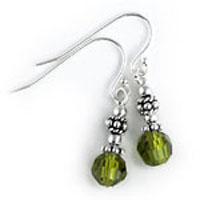
Olivine Earring

At the high temperatures and pressures found at depth within the Earth .....more

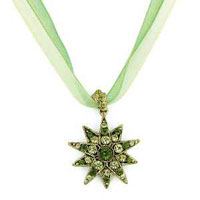
Olivine Necklace

Olivine's gemstone variety, recognized as Peridot, is one of the most.....more

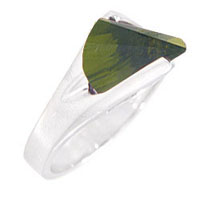
Olivine Rings

Olivine is known by many names. Besides its real mineral names.....more


    Properties   Glossary   links   Sitemap  
 

jewelry precious semi stone - precious stones - emerald gem stones - list of all semi precious stones - gem stones - amethyst gem stone - gem stone silver ring - crystal liquid - gem stone glossary - history of gems - types of gem - gem healing jewelry stone - Glittering Stones Properties - Glittering Stones Sitemap - Glittering Stones links - Glittering Stones News - Search Engine Optimization